

One of the first questions most property buyers ask is: “How much can I borrow?”
It is a reasonable question, but the answer is often more complicated than people expect.
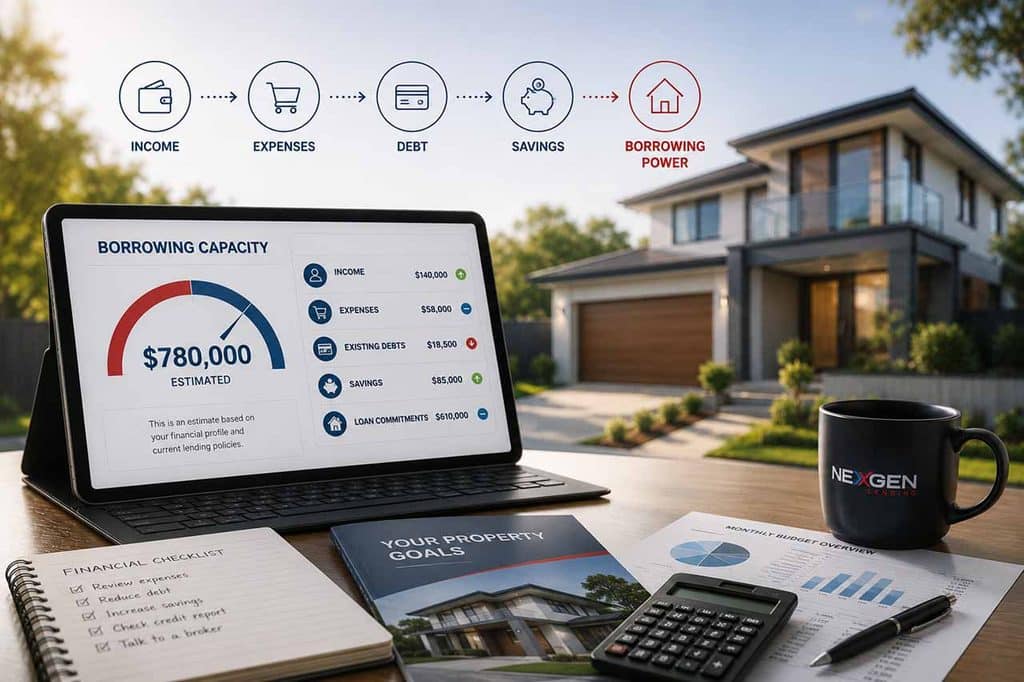
Many buyers assume borrowing capacity is simply based on income. In reality, lenders assess a wide range of factors when determining how much they are willing to lend.
As we move through 2026, lending policies remain relatively strict, interest rates are still higher than they were a few years ago, and lenders continue to place significant emphasis on serviceability.
Understanding how borrowing capacity works can help you set realistic expectations and make more informed property decisions.
Key takeaways
- Two borrowers on identical incomes can get very different limits, because lenders weigh overall financial position, not income alone.
- Even unused credit card limits reduce borrowing power, because lenders assume those facilities could be drawn on at any time.
- Declared living expenses are checked against benchmarks, and lenders may use the higher figure when assessing you.
- Lenders assess you at a higher hypothetical rate, known as a serviceability buffer, which lowers capacity below what many expect.
- Online calculators are estimates, not assessments, and cannot account for individual lender policies or complex income.
- The better question is how much you should borrow, not simply the maximum a lender will approve.
This article is general information only and does not consider your personal financial situation or needs.
What Determines Borrowing Capacity?
Borrowing capacity is the amount a lender may be willing to lend based on your financial situation.
While every lender has its own assessment criteria, most will consider:
- Income
- Employment stability
- Existing debts
- Living expenses
- Number of dependants
- Credit history
- Loan term
- Interest rate buffers
The combination of these factors helps determine whether you can comfortably afford future repayments.
Income Matters, But It Is Not the Whole Story
Your income is obviously important.
However, two people earning the same salary may receive very different borrowing limits.
For example:
- One borrower may have no debts.
- Another may have multiple credit cards and personal loans.
Even though their incomes are identical, their borrowing capacities can be significantly different.
Lenders are increasingly focused on overall financial position rather than income alone.
Existing Debts Can Reduce Borrowing Power
One of the biggest surprises for many borrowers is how much existing debt can affect serviceability.
Common examples include:
- Credit cards
- Personal loans
- Car finance
- Buy Now Pay Later facilities
- Investment loan commitments
Even unused credit card limits can reduce borrowing capacity because lenders assume those facilities could be used at any time.
Reducing unnecessary debt can often improve borrowing power.
Living Expenses Play a Bigger Role Than Many People Realise
Over recent years, lenders have increased scrutiny around household spending.
Expenses that may be considered include:
- Groceries
- Utilities
- Insurance
- Childcare
- Education costs
- Transport
- Entertainment
Lenders compare declared expenses against industry benchmarks and may use the higher figure during assessment.
This means spending habits can directly influence borrowing capacity.
Interest Rate Buffers Still Matter
Even if you qualify for a loan at today’s interest rate, lenders generally assess your application using a higher hypothetical rate.
This is known as a serviceability buffer.
The purpose is to ensure borrowers can continue meeting repayments if rates rise in the future.
While buffers help reduce risk, they can also lower borrowing capacity compared to what borrowers may expect.
Employment and Income Stability
Lenders typically prefer stable employment.
Full-time employees with a consistent income history may find the approval process more straightforward than borrowers with irregular income.
That does not mean self-employed borrowers cannot qualify.
However, additional documentation is often required.
Depending on your circumstances, lenders may assess:
- Employment history
- Industry stability
- Length of self-employment
- Business financial performance
Different lenders often assess self-employed borrowers differently, making lender selection particularly important.
Property Investors Face Additional Considerations
For investors, borrowing capacity is influenced by both personal income and existing property commitments.
Lenders may consider:
- Rental income
- Existing investment loans
- Portfolio size
- Property expenses
- Future debt commitments
Some lenders are more investor-friendly than others, which can create significant differences in borrowing outcomes.
Why Online Borrowing Calculators Can Be Misleading
Many buyers start their research with online borrowing calculators.
These tools can provide a rough estimate but should not be treated as a formal assessment.
Most calculators cannot accurately account for:
- Individual lender policies
- Credit card limits
- Living expenses
- Investment income treatment
- Self-employed income structures
- Complex financial situations
As a result, actual borrowing capacity may differ considerably from online estimates.
Ways to Improve Your Borrowing Capacity
If you are planning to buy property in the future, there may be opportunities to strengthen your borrowing position.
Potential strategies include:
Reduce Existing Debt
Paying down credit cards, personal loans and car loans can improve serviceability.
Review Credit Limits
Even unused credit card limits may impact borrowing capacity.
Reducing unnecessary limits can sometimes make a meaningful difference.
Increase Savings
A stronger savings position may improve lender confidence and strengthen your overall application.
Improve Financial Management
Demonstrating consistent financial behaviour can support a stronger lending profile.
Seek Professional Guidance
Different lenders assess borrowers differently.
A lending strategy tailored to your circumstances can sometimes produce significantly better outcomes than approaching lenders individually.
Why Borrowing Capacity Is Only Part of the Equation
Many buyers focus exclusively on the maximum amount they can borrow.
A more important question is often: “How much should I borrow?”
Just because a lender approves a particular amount does not necessarily mean it is the most comfortable or appropriate level of debt for your circumstances.
When planning a property purchase, it is important to consider:
- Lifestyle goals
- Future plans
- Cash flow flexibility
- Unexpected expenses
- Interest rate changes
The right borrowing amount should support both your property goals and your broader financial wellbeing.
What Borrowers Should Expect in 2026
The lending environment in 2026 continues to reward well-prepared borrowers.
Strong financial habits, stable income and a clear understanding of your financial position can help improve your options.
While borrowing capacity remains an important starting point, the most successful buyers are often those who understand their finances before they begin searching for property.
The Bottom Line
Borrowing capacity is influenced by far more than income alone.
Lenders assess a combination of income, expenses, debts, employment and future affordability when determining how much they may be willing to lend.
Understanding your borrowing position early can help you avoid disappointment, focus your property search and create a strategy that aligns with your long-term goals.
If you are considering buying, investing or upgrading in 2026, obtaining an accurate assessment of your borrowing capacity is often one of the smartest first steps you can take.
Frequently Asked Questions
What do lenders look at when working out how much I can borrow?
Most lenders consider income, employment stability, existing debts, living expenses, number of dependants, credit history, loan term and interest rate buffers when assessing borrowing capacity.
Do unused credit cards affect borrowing capacity?
Yes. Even unused credit card limits can reduce borrowing capacity because lenders assume those facilities could be used at any time.
Are online borrowing calculators accurate?
They provide a rough estimate only. Most calculators cannot account for individual lender policies, credit card limits, living expenses, investment income treatment or self-employed income structures, so actual capacity may differ considerably.
This article is general information only. It does not take into account your personal financial situation, objectives or needs. Lending criteria and lender policies are subject to change. Consider seeking personalised advice from a qualified mortgage broker or financial professional before making any borrowing decisions.