
![Heroarticle[1]](https://nexgenlending.com.au/wp-content/uploads/2025/11/HeroArticle1.jpg)
Ready to buy with a small deposit, but worried prices are running away? In 2025, QLD Government initiatives, such as the Queensland first home buyer grants and guarantee schemes, are giving first home buyers a bigger leg up with a 5% deposit, no LMI, cheaper tax on new builds, and a $30k grant. The catch is that more buyers are bidding at the bottom, so entry prices are climbing.
In this guide, we break down the key levers, how they stack, and what to target. We cover Brisbane, Ipswich, Logan, and Moreton Bay, as well as the Gold Coast and Sunshine Coast. You’ll see which price points are still within reach under the property price caps, which property types make sense, and the steps to buy with confidence.
Key takeaways
- Queensland first home buyers in 2025 have more help than ever – 5% deposit options, no LMI, a $30,000 First Home Owner Grant on new builds under $750k, and stamp duty exemptions can slash the cash you need to get started.
- These incentives are pushing up entry-level prices, especially in Brisbane, Ipswich, Logan, Moreton Bay, the Gold Coast and Sunshine Coast, as more buyers compete for the same townhouses, older units and house-and-land packages.
- New builds under $750,000 are the sweet spot if you want to stack the $30k grant and stamp duty exemption with a 5% deposit – but you must keep the total turnkey price (land, build, site costs and upgrades) under the cap.
- As a rough guide, every $10,000 of deposit supports about $200,000 of purchase price with a 5% deposit structure (for example, $25k ≈ $500k, $30k ≈ $600k, $40k ≈ $800k), subject to lending rules and scheme caps.
- Winning in this market is about structure, not just price – line up pre-approval early, focus on properties that fit the caps, use strong contract conditions (finance plus building and pest), and watch signals like stock levels, days on market and developer incentives.
- Timing your move matters: waiting can help if stock is rising and sellers are discounting, but if incentives are time-limited and your target stock is thin, buying sooner and locking in grants and concessions can be more valuable than chasing a small price dip.
This guide is general information only and does not take your personal objectives, financial situation or needs into account. Consider getting advice from a licensed mortgage broker or financial adviser before making decisions.
What changed in Queensland in 2025, and why entry-level prices are climbing

Queensland has introduced multiple supports that make it easier to get the keys with lower deposit requirements. The Home Guarantee Scheme allows eligible buyers to purchase with a 5% deposit and avoid paying Lenders Mortgage Insurance (LMI), subject to eligibility criteria that open the door to more buyers who were previously stuck renting.
According to current settings, there are generous property price caps and support for buyers in Brisbane and major centres, as well as regional areas. Combined with state-based concessions, these measures have significantly reduced the upfront cash needed to get into a first home.
From May 2025, first-home buyers of new builds can receive a full stamp duty exemption under Queensland’s stamp duty removal for qualifying new homes. That is a significant saving on day one. Additionally, the $30,000 First Home Owner Grant applies to new homes valued under $750,000 in QLD and is set to run through to June 2026. Stack those two, and the upfront cash needed for building a new home drops by tens of thousands.
There is also a Boost to Buy program scheduled to roll out later in 2025, offering a 2% deposit option via a shared equity structure. It includes government equity of up to 30% for new homes and 25% for existing homes, with a maximum value of $1 million and income caps applying.
Put it all together and demand at entry-level lifts. Lower deposits, no LMI, and tax relief attract more buyers to open homes, which pushes up prices at the lower end. We are seeing this pressure first in popular suburbs across Brisbane, Ipswich, Logan, and Moreton Bay, where townhouses and older units are facing increased competition. It’s important to note the differences in first-home concessions: new builds offer bigger upfront perks than established homes.
- Learn about the Housing Australia administered Home Guarantee Scheme settings
- Read about Qld transfer duty for first home buyers
- First Home Owner Grant details
5% deposit, no LMI: how the Home Guarantee Scheme changes the game

The Home Guarantee Scheme lets eligible first home buyers purchase with a 5% deposit and avoid paying Lenders Mortgage Insurance (LMI). That can save thousands and speed up the move from renting to owning, provided you meet criteria such as no prior home ownership and using the property as your principal place of residence.
A quick example: a $600,000 home requires approximately a $30,000 deposit under this style of scheme. Compare that to a 20% deposit of $120,000. The gap is massive, and the time to save decreases significantly.
You still need to qualify for the loan, pass serviceability checks, and have buffers for costs. However, the entry hurdle is far lower than it was before.
New build stamp duty exemption and the $30k grant

From May 2025, first-home buyers will receive a full stamp duty exemption on qualifying new builds. The $30,000 First Home Owner Grant applies to new homes valued at under $750,000 and is currently extended to June 2026. Line these up, and the savings can be huge for a new home.
For example, a buyer building a $740,000 townhouse could save stamp duty, collect $30,000, and pair it with a 5% deposit and no LMI. That combo can trim the cash needed by tens of thousands, which is often the difference between waiting and buying this year.
Check timing. Grants and exemptions often turn on contract or settlement dates. Have your solicitor confirm the dates before signing.
Price caps that matter in 2025
Key caps and thresholds to keep an eye on in 2025 include:
- Home Guarantee Scheme caps: property value caps apply, with higher caps in Brisbane and regional centres, and lower caps in other areas. These set the maximum purchase price under the scheme.
- First Home Owner Grant (FHOG) – $30,000: applies to new homes under $750,000, including land and build, with current settings running to June 2026.
- New build caps: If a new build exceeds $750,000, you lose the $30k grant and the stamp duty-free ride. Pricing is critical, so keep the total package cost under the cap, including site costs and upgrades.
What you can still afford with a 5% deposit in Queensland
Simple maths helps set a target. With a 5% deposit, every $10,000 saved supports a purchase band of about $200,000. That is a rough guide and not financial advice, but it helps us think in ranges:
- $25,000 deposit points to roughly a $500,000 purchase.
- $30,000 deposit points to around $600,000.
- $40,000 deposit points to roughly $800,000, if it sits under the relevant property price caps.
For new builds under $750,000, the $30,000 First Home Owner Grant and stamp duty exemption can boost buying power, subject to the principal place of residence requirement. It removes stamp duty on a new home and adds FHOG cash. Combined with a 5% deposit, that can make a townhouse or house-and-land package more realistic.
Established homes do not qualify for the grant or the new-build stamp duty exemption, but many fall under the relevant scheme caps. That means a 5% deposit and no LMI can still be on the table. In tight markets, that can be a strong path into older units, townhouses, or smaller houses.
Always include buffers for legal fees, inspections, and moving costs. Add a small emergency buffer for rate changes.
Brisbane: target property types and prices that still stack up
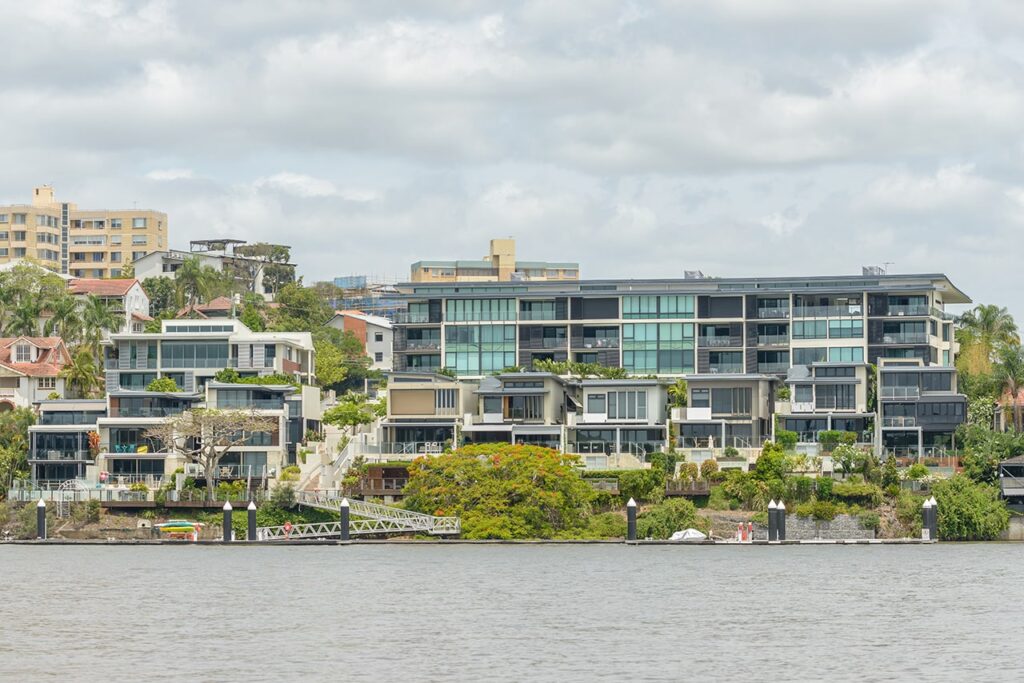
In Brisbane, a $25k deposit suggests roughly a $500k buy, a $30k deposit suggests about $600k, and a $40k deposit suggests around $800k (subject to borrowing capacity).
- Older 2-bed units in inner to middle-ring suburbs often sit under $600k.
- Townhouses in the middle to outer ring commonly sell between $550k and $750k.
- Select new townhouses priced under $750k can keep you eligible for the $30k grant and stamp duty exemption.
Many established homes under the relevant caps can be bought with a 5% deposit under the scheme, opening options in fringe suburbs for houses or, in rare cases, duplexes.
Ipswich: value in new estates and established houses
Ipswich still delivers value. A 5% deposit can open house-and-land packages and townhouses in new estates, many of which are priced under the $750,000 value limit for the grant.
- Ask for turnkey quotes that include driveway, fencing, floor coverings, and landscaping.
- Keep the total package price under $750,000 to lock in the grant and stamp duty savings.
- Established homes under lower price caps also stack up well with 5% and no LMI.
Good transport, growing amenities, and new schools add to the long-term appeal.
Gold Coast: family suburbs with room to move
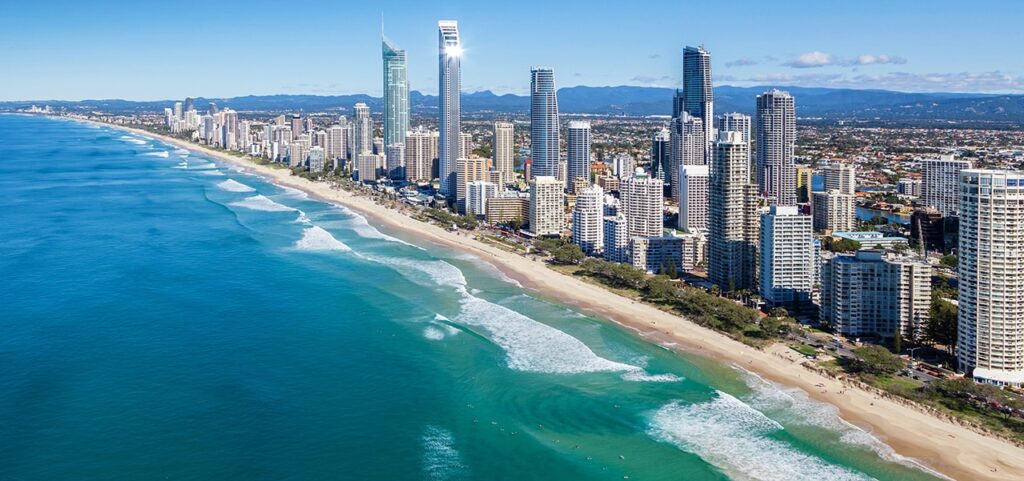
The Gold Coast is not just high-rise units. Family suburbs inland and in the north offer established houses and new townhouses that can be purchased for under $750k (although it is becoming increasingly difficult to find).
- Check the total package price on new builds, including upgrades and site works, and aim to stay under the $750k cap.
- Established houses in older suburbs can suit buyers with a 5% deposit. You don’t get the grant, but no LMI helps a lot.
- Be aware that properties under $750,000 may require a longer commute and increased travel expenses.
Access to jobs, lifestyle, and future projects makes the Coast a strong hold over the long term.
Moreton Bay: growth areas near trains and jobs
North of Brisbane, Moreton Bay continues to grow. Buyers can explore townhouses and new estates around Kippa-Ring, Mango Hill, Morayfield, and Burpengary. Proximity to train lines and major centres lifts rental demand and resale appeal.
Stay under $750k on new stock to keep the $30k grant and stamp duty exemption. If you prefer an established home, a 5% deposit and no LMI can still take you up to the relevant scheme caps.
A simple rule is to pick areas with jobs, trains, and schools in easy reach.
Sunshine Coast: lifestyle demand
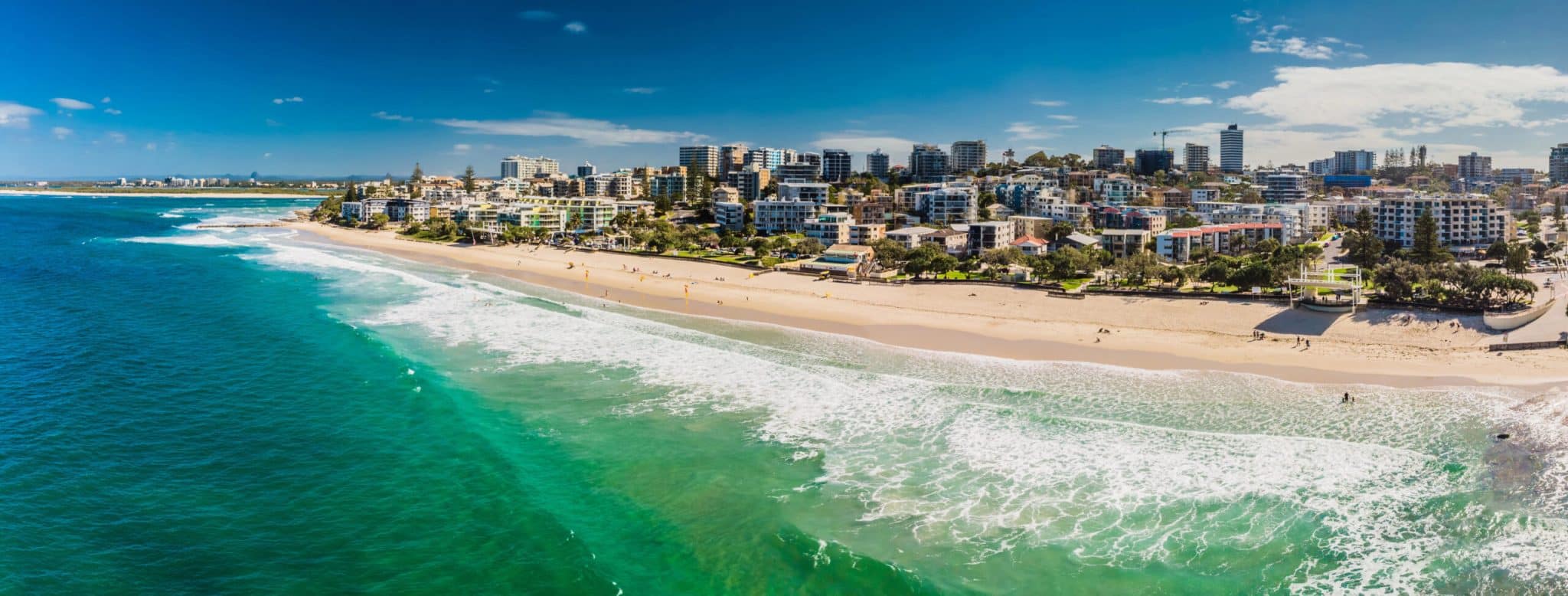
Lifestyle demand is strong, but smart picks still exist. Townhouses and new estates inland or in growth corridors can slip under $750k if you hunt, although it might feel like finding a unicorn.
- Target new townhouses under $750k to keep the grant and stamp duty exemption.
- Consider established homes that meet your budget, with a 5% deposit and no LMI helping the numbers.
In busy markets, act early and keep your terms clean.
Buy smart in a rising market: simple steps that can save you thousands
Speed, structure, and clean paperwork help you win in a hot entry market. Small edges add up. Here is a simple path to move fast without blowing the budget.
- Set budget bands and a walk-away price.
- Line up a pre-approval before you book inspections.
- Focus on properties that fit the incentives and caps.
Stack the incentives the right way
Use this quick checklist to review the eligibility criteria for securing these incentives:
- Confirm eligibility for a 5% deposit and no LMI under the relevant guarantee scheme.
- Aim for new builds under $750k to secure the First Home Owner Grant of $30k and the stamp duty exemption.
- Check contract and settlement timing so you meet grant deadlines, including any cut-off dates that apply.
- Confirm the total turnkey price, including site costs and upgrades, sits under the cap, and ensure you can meet the move-in timeframe.
Stacking these benefits can reduce upfront cash and shorten the saving timeline.
Protect your deposit with smart contract conditions
- Use “subject to finance” and “building and pest” conditions.
- Hire an independent conveyancer. Ask them to check dates, inclusions, special conditions on new builds, and any disqualifying arrangements.
- Review sunset dates, liquidated damages, and variations clauses. Keep it simple and clear.
These steps guard your deposit and help keep stress low.
Widen the search and move with confidence
- Add older units, townhouses, house-and-land, and even substantially renovated homes (which may qualify as new) to your shortlist.
- Compare like-for-like inclusions on builds for your new home. Avoid costly upgrades that push you above $750k.
- Make quick, fair offers with clear terms. Short finance, clean conditions, and a firm settlement date help you stand out.
Keep your goals tight and stick to the plan.
Where entry-level prices may move next, and how to time your move
The current settings, including lower deposit paths and grants, support increased demand at the entry level across Brisbane, Ipswich, Logan, Moreton Bay, and nearby coastal areas. As more people buy with a 5% deposit, the bottom band can climb.
Supply responses help, but they take time, and initiatives like the Residential Activation Fund could add to future stock through developer incentives.
You can still play it smart. Watch on-the-ground signals—track stock in your price band and move when the odds suit you. If incentives have timelines, use them to your advantage. For first home buyers eligible under schemes like the 5% deposit option, applicants typically must be Australian citizens or permanent residents to tap into this growing pool.
For area research and vacancy trends, investor data sites can help frame the demand side, especially when contrasting first home buyer activity with trends in investment properties in QLD: sqmresearch.com.au.
Signals to watch in each area
- Number of listings under $750k.
- Days on market for entry stock.
- Auction clearance trends and vendor discounting.
- Incentives and rebates offered by developers.
- Rental vacancy rates and open-home attendance.
Low stock and rising attendance often point to higher prices ahead. Developer rebates can point to slack demand or a push to hit targets.
When waiting helps, and when buying now is smarter
Waiting helps if stock is rising, sellers are discounting, and open-home traffic is thinning. Prices can stall, and you may be able to negotiate better terms.
Buying sooner is beneficial if listings are scarce, incentives are time-limited, or your shortlist is nearing sold-out stages. If you can buy for under $750k and stack the grant and stamp duty exemptions, while ensuring you meet any residency requirements, acting now can be worth more than waiting for a slight price dip.
A 5% deposit can bring the timeline forward. Time in the market often matters more than timing it perfectly, especially for a first home.
A 90-day plan to buy with a 5% deposit
- Weeks 1 to 2: Contact your broker or lender to get your application underway and lock in pre-approval. Set budget bands and list must-haves and deal-breakers.
- Weeks 3 to 6: Shortlist suburbs and property types. Inspect 10 to 15 homes. Track sale prices and days on market.
- Weeks 7 to 10: Make offers with smart conditions. Use clean terms and quick timeframes.
- Weeks 11 to 13: Conveyancing, building and pest, valuation, and finance finalisation. Order insurance and book settlement.
Keep notes after each open. Adjust fast. Stick to the caps that keep your incentives alive.
Conclusion: making today’s rules work in your favour

Queensland first home buyer grants and guarantee schemes in 2025 open the door with a 5% deposit, no LMI, a stamp duty exemption on new builds, and a $30k grant, with a 2% shared equity option on the way. More buyers means entry prices can lift, so a sharp plan matters for the first home buyer.
Set a clear budget, target the right price bands, and stack incentives without tipping over property price caps. If you are ready, start pre-approval this week and map a 90-day path to keys in hand. Make the most of today’s rules while they work in your favour.